
The Highlands Ability Battery is the most rigorous self-assessment most people will ever take, and one of the least understood from the outside. This is a walk-through of what’s actually in it.
What the assessment is, mechanically
The Highlands runs 3.5 hours, online, in one sitting. (You can take a short break in the middle if you need to, but most people just push through.) It’s a sequence of 19 timed subtests — work samples, not opinion questions. You classify patterns, hold visual designs in working memory, sort cards by category, identify components of musical pitches, generate ideas under time pressure, and several other things in that family.
Each subtest is normed against a population sample so your score is meaningful in context. The final report is a 30-page PDF showing where you fall on 14 abilities, three personal styles, and one core skill — almost always with some scores high, some medium, some low. There is no “good profile” or “bad profile.” Everyone’s shape is different.
The three categories of output
The report breaks into three categories of measured attributes:
- 14 natural abilities — measured cognitive capacities, stable across the lifespan from age 14–15 onward.
- 3 personal styles — measured behavioral tendencies (extroversion/introversion, generalist/specialist, time-frame), also stable.
- 1 core skill — vocabulary, which unlike abilities is not stable and is the single best predictor of academic and professional performance.
The 14 abilities, one by one
I’ll explain each one briefly. Don’t try to self-diagnose from the descriptions — that’s exactly the trap the assessment is designed to avoid. The point of the test is to give you objective data you can’t derive from introspection.
Classification
How quickly you can identify patterns among groups of items. High Classification correlates with diagnostic roles — medicine, troubleshooting, certain kinds of investing — where the job is to recognize what’s happening fast.
Concept Organization
How well you arrange information into logical structures. High Concept Organization shows up in research, consulting, law, complex writing, and engineering management. It’s the “build a framework from a mess of inputs” ability.
Idea Productivity
How many distinct ideas you generate under time pressure. High Idea Productivity is common in advertising, product, journalism, marketing, design, and entrepreneurship. Low Idea Productivity isn’t a deficit — it often pairs with deeper, more sustained work on fewer ideas.
Spatial Relations: Theory
Your ability to visualize 3D objects and their relationships from 2D representations. Critical for architecture, engineering, surgery, industrial design, and any field where you need to think in three dimensions without physical models in front of you.
Spatial Relations: Visualization
Closely related but distinct: how fluidly you can mentally rotate and manipulate spatial information. The difference between these two spatial abilities is one of the things the Highlands is uniquely good at picking out.
Inductive Reasoning
How well you find patterns in data and draw general conclusions from specific cases. High Inductive Reasoning correlates with research, certain kinds of finance, intelligence work, and academic careers. This is the “see the pattern in the noise” ability.
Analytical Reasoning
How well you break a complex problem into parts and reason through it systematically. Useful everywhere; high levels correlate with law, engineering, software, and management consulting.
Number Memory
How well you hold sequences of digits in working memory. Sounds like a minor parlor trick; in practice it’s diagnostic for any work involving complex calculations under time pressure.
Design Memory
How well you remember visual designs and patterns. Critical for visual design, navigation roles, surgery, and certain kinds of teaching where you need to hold a lot of visual information without re-checking.
Observation
How quickly you notice details and changes. Important for security work, investigative journalism, certain clinical roles, and quality assurance.
Visual Speed and Accuracy
How quickly you process and act on visual information. Affects effective performance in any rapid-decision-making role — emergency medicine, athletics, certain trading roles, design feedback at speed.
Verbal Memory
How well you hold and recall verbal information. Important for law, teaching, writing, language learning, sales, and roles where you need to remember conversations and references precisely.
Pitch Discrimination
How accurately you distinguish musical pitches. Yes, it’s in the assessment. It correlates with musical ability obviously, and less obviously with phonetic language learning and certain kinds of medical diagnostic listening.
Rhythm Memory
How well you remember and reproduce rhythmic sequences. Like pitch, the obvious correlations are musical; less obvious are athletic timing, dance, and certain clinical fields.
The three personal styles
Extroversion / Introversion
Behaviorally measured — not self-reported. This is one place the Highlands gives you data you may not have. Some people self-identify as one thing and the assessment finds the opposite, because what they’ve learned to do socially has obscured their natural orientation.
Generalist / Specialist
Whether you naturally pursue depth in a single field or breadth across many. High specialists thrive in research, surgery, scholarship, and certain technical roles. High generalists thrive in executive roles, entrepreneurship, journalism, and consulting.
Time Frame
Whether your natural attention horizon is short (hours, days), medium (weeks, months), or long (years, decades). Mismatched time frame is one of the most common career-misery patterns — long-time-frame people stuck in short-cycle work, or vice versa.
The one core skill
Vocabulary. The Highlands measures it because it’s the single best predictor of academic and professional performance across virtually all fields, and because — uniquely among Highlands measures — it’s trainable. If your vocabulary score is below where you want it, you can read your way to a higher score in 18 months.
What the debrief actually does
The 30-page report is dense. Most clients reading it alone come away with one or two correct takeaways and several wrong ones. That’s why every serious Highlands engagement includes a debrief.
At Timshel, the debrief is two hours, one-on-one, in Charlottesville or Asheville or over video. We work through the full report in plain language, focused on the specific decision you came in with: a college choice, a major, a career change, a transfer, a post-graduation plan. The goal is that you leave the room knowing what to do next.
The investment is $495 for the assessment plus the two-hour debrief — about half of clients never need anything further. If you do want to go deeper, the eight-session Personal Vision Coaching Program builds on the Highlands results.
Schedule a 15-minute call if you want to talk through whether this is the right time and the right tool for the decision in front of you.
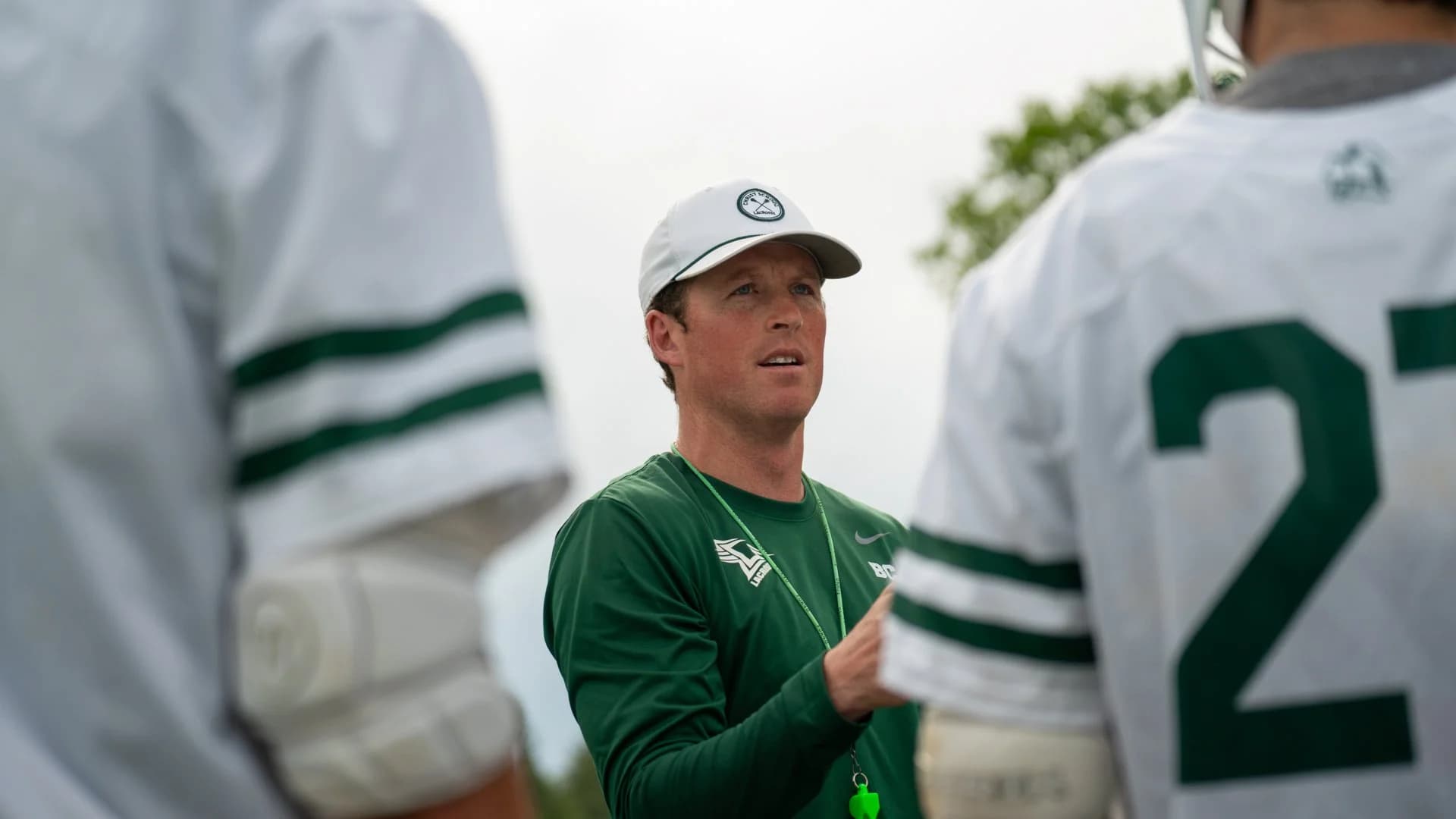
Founder of Timshel Personal Consulting. Nine years at Christ School (Asheville, NC) as teacher, coach, and Dean of Campus Life. Vanderbilt Peabody M.Ed. in Independent School Leadership. Lacrosse Program Director at The Covenant School in Charlottesville, VA. Sees clients across Virginia and North Carolina.