
Twice a month, somebody asks me a version of the same question: I’ve already done Myers-Briggs. What does the Highlands Ability Battery give me that’s different?
The short answer: the Myers-Briggs measures your preferences. The Highlands measures your abilities. Those are two different categories of information, useful for two different categories of decisions. If you only have budget for one of them, the right answer depends on what you’re deciding.
The question each tool answers
Every self-knowledge tool is built to answer a specific question. Read the marketing copy of each tool with the following question in mind: what is this trying to tell me?
- Myers-Briggs (MBTI): “How do I prefer to engage with the world?”
- Enneagram: “What is my core emotional motivation?”
- StrengthsFinder / CliftonStrengths: “What themes show up most strongly in how I act?”
- DISC: “What is my behavior under normal and stressful conditions?”
- Highlands Ability Battery: “What can my brain actually do, measured against a population sample?”
Four of these are self-report: you answer questions about yourself, and the tool reports back a summary of what you said. The Highlands is the only one in that list that measures performance on timed work samples. That distinction is the entire argument.
What Myers-Briggs actually does
MBTI presents a series of either/or statements and asks you to choose which feels more like you. From your answers, it sorts you onto four binary scales — extroversion/introversion, sensing/intuition, thinking/feeling, judging/perceiving — and gives you a four-letter type.
For all the criticism MBTI gets, it is genuinely useful for one thing: building shared vocabulary in a team or couple. If you and your spouse both know you’re an INTJ and they’re an ESFP, you have a shorthand for explaining why certain arguments keep happening. That’s real value.
Where it breaks down is when people use a four-letter type to make a career decision. The MBTI is not designed to predict career fit. It tells you what kinds of environments you’ll prefer, not what kinds of work your brain is built to do well at.
What the Highlands does
The Highlands Ability Battery uses 19 timed subtests over 3.5 hours. Each subtest is a work sample: you classify patterns, hold visual designs in working memory, identify components of musical pitches, sort cards by category, and so on. Your score on each is measured against a normed population.
The output is a 30-page report measuring 14 natural abilities, three personal styles, and one core skill. Abilities include Classification, Concept Organization, Idea Productivity, Inductive Reasoning, Memory for Design, Visual Speed and Accuracy, and so on. Personal styles include extroversion/introversion (measured behaviorally, not self-reported), generalist/specialist orientation, and time-frame preference (short vs long).
Crucially, the Highlands tells you things you don’t already know. You probably know if you’re an introvert. You probably don’t know if you have high Inductive Reasoning paired with low Visual Memory for Design, and what that combination means for the kinds of cognitive work that’ll feel effortless versus grinding.
Side-by-side comparison
| Myers-Briggs | Highlands Ability Battery | |
|---|---|---|
| What it measures | Self-reported preferences | Performance on timed work samples |
| Time to complete | ~20 minutes | 3.5 hours |
| Stable over time? | Type can shift with mood or context | Yes — abilities stable by age 14–15 |
| Best for | Building team vocabulary, couples work | Career & major decisions, leadership development |
| Cost | Free (informal) to $50 (official) | $495 at Timshel (includes 2-hour debrief) |
| Used by | Most knowledge workers casually | Fortune 500 leadership teams, independent schools, professional sports |
Which to use, when
Here’s how I sort it for the people who ask:
- Choosing a college major, a career, or a job change.Highlands. Preferences will tell you what you’d enjoy. Abilities will tell you what you’ll thrive at. The intersection is where you want to be.
- Trying to communicate better with a spouse or a team. Myers-Briggs is fine. Enneagram works too. The Highlands is overkill for relational vocabulary.
- Recovering from a career mismatch.Highlands. If you’ve spent 10 years grinding at something that should feel easier, you need objective data on what your brain is actually good at.
- Onboarding a new team member.Both. MBTI in week one for team vocabulary. Highlands in month three when you’re designing their actual job.
- Helping a high schooler choose a college and major. Highlands. Free quizzes have done enough damage.
What I tell clients
I’ve sat with hundreds of people through their Highlands debrief. About half of them have done MBTI already. None of them have ever told me the two contradicted each other — they’ve told me the Highlands explained why the MBTI pattern showed up the way it did.
Use both, if you want. But know what each one is for. Don’t make a career decision on a personality test. And don’t expect an ability test to tell you who you’ll fall in love with.
If you’re facing a decision about a major, a career, or a job change, the Highlands Ability Battery at Timshel is $495 for the assessment plus a two-hour debrief. Most clients walk out with material clarity on the decision in front of them. Schedule a 15-minute callif you want to talk through whether it’s the right tool for your situation.
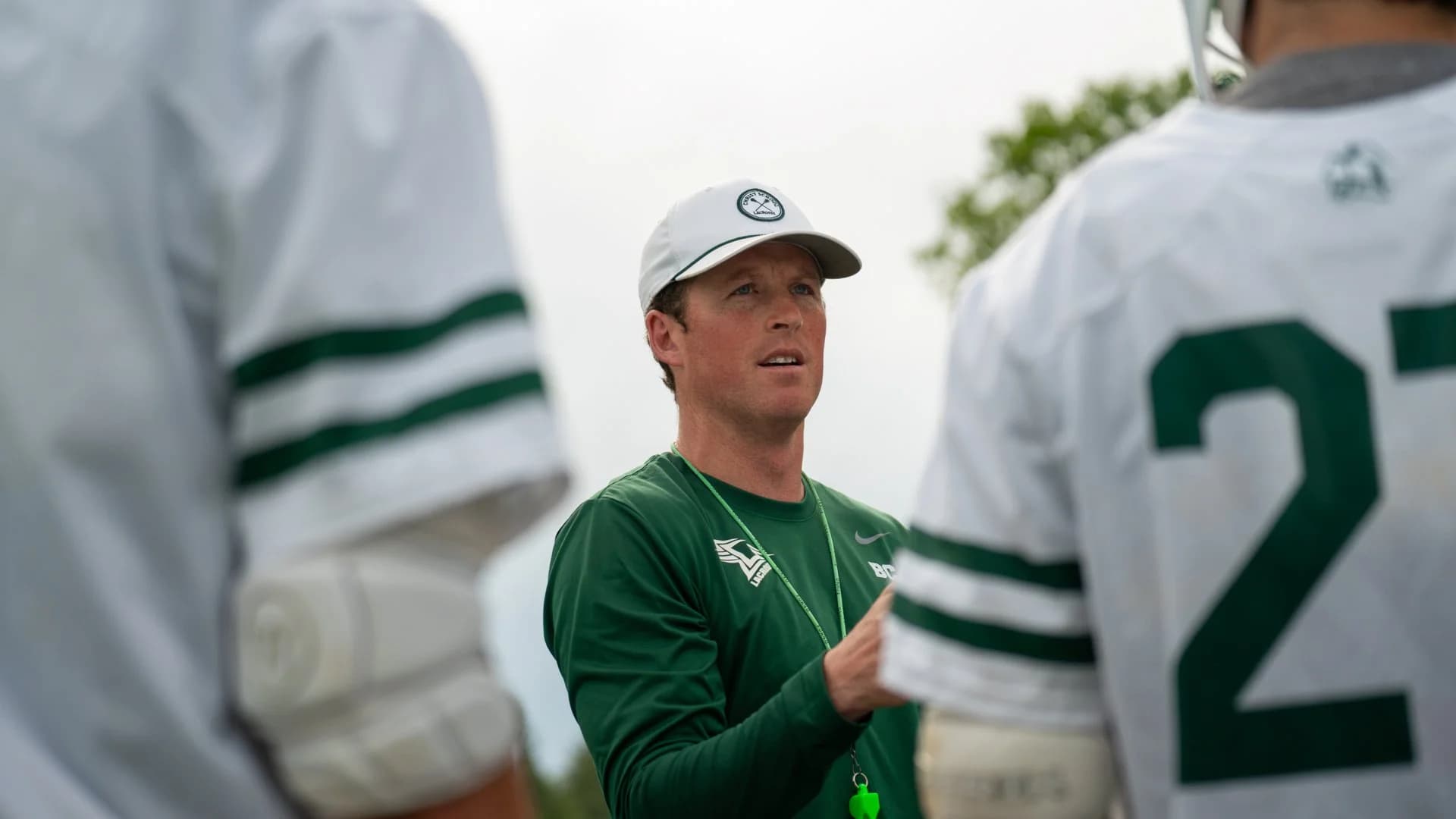
Founder of Timshel Personal Consulting. Nine years at Christ School (Asheville, NC) as teacher, coach, and Dean of Campus Life. Vanderbilt Peabody M.Ed. in Independent School Leadership. Lacrosse Program Director at The Covenant School in Charlottesville, VA. Sees clients across Virginia and North Carolina.