
Most parents have already watched their teenager take a free career quiz. The kid clicks through 12 questions on Google’s “What Should I Be When I Grow Up,” gets a result that says “Marketing Manager,” shrugs, and forgets the whole thing within 48 hours.
Two years later, that same kid is choosing a college and a major. The career quiz has done nothing for them, and you’re wishing they had real information about themselves before they spend $200,000 on a four-year decision.
This essay is for parents in that position. The short version: there isa serious assessment that does what you want, it’s called the Highlands Ability Battery, and it doesn’t look or feel anything like the free quiz.
What a good career assessment actually does
A useful career assessment for a teenager has to do three things:
- Give the student objective information about themselvesthey don’t already know. If the assessment confirms what they could’ve told you in a one-line summary, it’s not worth doing.
- Be stable— i.e., not change based on the teenager’s mood that day or what their friend just said about their major. Assessments based on preferences fail this test; assessments based on measurable ability pass it.
- Translate into specific decisions— major selection, school selection, career direction — rather than vague self-descriptions like “you’re a creative type.”
The problem with free career quizzes
Almost every free quiz that comes up when you Google “career test for teenagers” is built on a model called Holland Codes (RIASEC). It’s a respectable framework — it sorts people into six interest categories — but the quizzes built on top of it are short, self-reported, and trying to keep the user engaged. None of those three traits are good for a real decision-making tool.
Specifically, free quizzes fail because:
- They’re too short. A 12-question quiz can only crudely map preferences, not measure ability.
- They’re self-reported. Teenagers are notoriously poor self-reporters about cognitive ability. (Adults aren’t much better.)
- They privilege engagement over accuracy. The results are designed to feel revelatory, not to be load-bearing.
- They give aggregate outputslike “you’re an artistic type, consider being a graphic designer,” which collapses across 20 different cognitive profiles that look nothing alike.
Free quizzes aren’t useless. They make for good dinner-table conversation. But you shouldn’t make a college decision on one.
Ability tests vs personality tests
Here’s the key distinction that most parents — even ones who know to be skeptical of quizzes — don’t know:
- Personality tests (Myers-Briggs, Enneagram, DISC, StrengthsFinder) measure self-reported preferences. You answer questions about how you tend to behave. The output is a description of yourself.
- Ability tests(Highlands Ability Battery, Johnson O’Connor) measure performance on timed work samples. You don’t answer questions about yourself; you do timed tasks and your score is measured against a population. The output is objective data on your cognitive profile.
For a teenager facing a college-major decision, ability data is materially more useful than personality data. Personality will tell you what they’d enjoy. Ability will tell you what they’ll thrive at. You want the intersection.
(For a longer treatment of this distinction, see Highlands Ability Battery vs Myers-Briggs.)
What to look for in a real assessment
If you’re considering an assessment for your teenager, look for these things:
- It takes hours, not minutes.The Highlands runs 3.5 hours. Other respectable ability assessments (Johnson O’Connor) take longer. Anything that takes 20 minutes can’t do what you want.
- It includes a debrief. The raw output of any ability assessment is a dense PDF that requires interpretation. A teenager reading their Highlands report alone is going to come away with the wrong takeaways.
- It uses timed work samples, not opinion questions. If every question starts with “How much do you agree…” it’s a personality test, not an ability test.
- It’s stable across the lifespan.Abilities, properly measured, develop by age 14–15 and don’t materially change after. That means a Highlands taken in junior year is still valid at age 40.
When in high school to do it
For most teenagers, the right window is junior year through the summer after senior year. A few specifics:
- Sophomore yearcan be too early — abilities are still settling for some 15-year-olds, and the college conversation hasn’t crystallized yet.
- Junior fall is ideal if you want to use the results to inform college list and major direction.
- Senior fall is ideal if you want the results to help with deposit-time decisions (where to enroll among offers).
- Gap year or summer before college is excellent if your student is unsure about major and wants real data before declaring.
How much it should cost
A serious career assessment for a teenager is in the $400–$800 range when you include the debrief. At the low end, that buys you the assessment itself and a single debrief conversation. At the high end, you’re getting a multi-session engagement.
At Timshel, the Highlands assessment plus a two-hour debrief is $495. That includes the online assessment, the full report, and the debrief with Benjie either in Charlottesville, Asheville, or over video. Some families come back two years later for a younger sibling. About half of clients never need anything beyond the single session.
The conversation that comes after
The thing about a good assessment is that it doesn’t end at the report. It opens a new conversation. Your teenager has new vocabulary to describe how they’re wired. You have new vocabulary to help them think through decisions. The school’s college counselor has objective data to anchor advising sessions on.
That follow-on conversation is where the value actually accrues. We’ve had clients revisit their Highlands report ten years after they took it — at the next career inflection point — and find it still useful. The data is stable. Your child is the one who grows around it.
If you’re considering this for your teenager, the easiest next step is to schedule a 15-minute call. We’ll talk about the specific decision in front of your child and whether the Highlands is the right tool for it. If it isn’t, I’ll tell you what is.
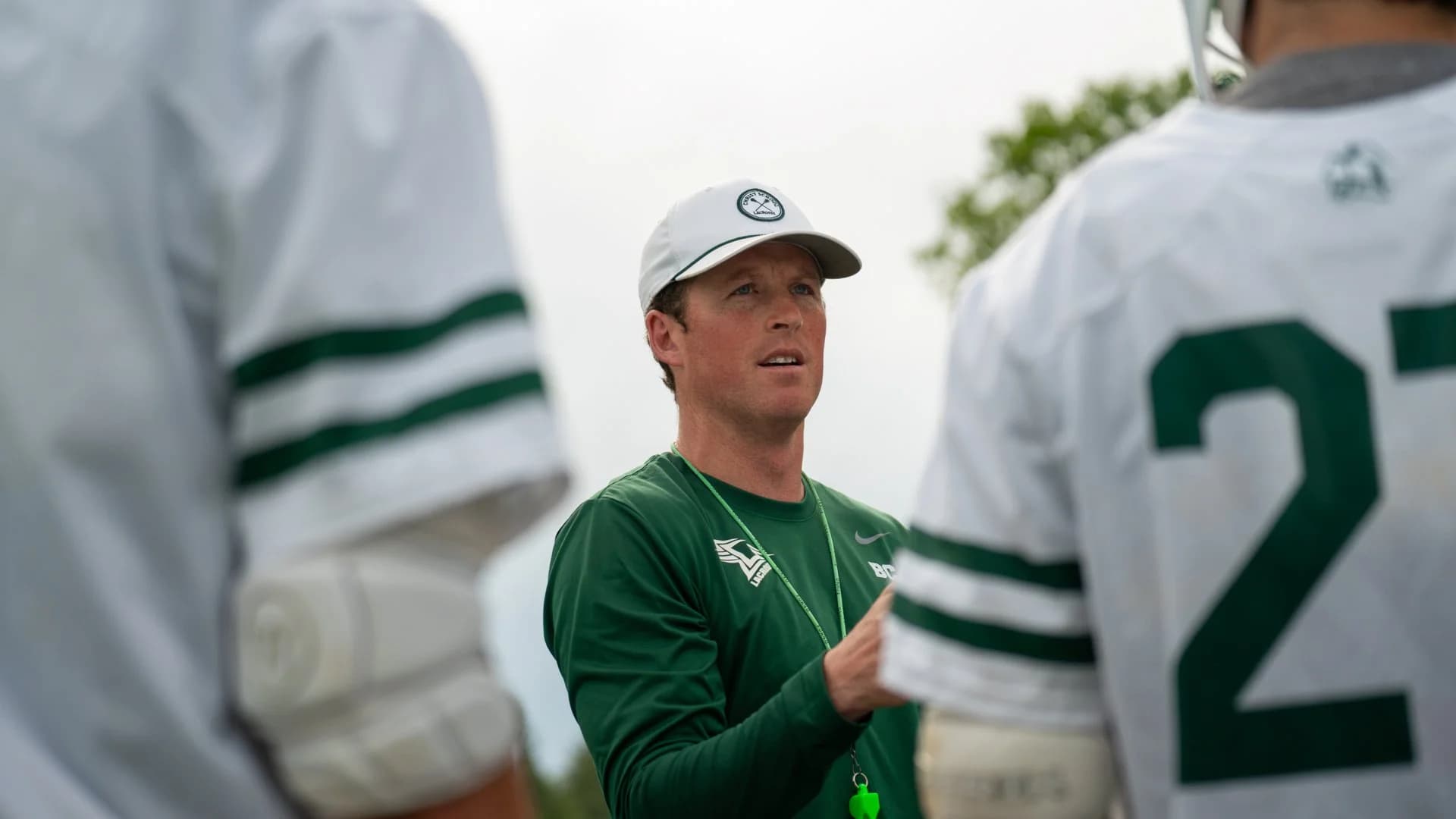
Founder of Timshel Personal Consulting. Nine years at Christ School (Asheville, NC) as teacher, coach, and Dean of Campus Life. Vanderbilt Peabody M.Ed. in Independent School Leadership. Lacrosse Program Director at The Covenant School in Charlottesville, VA. Sees clients across Virginia and North Carolina.