
Ninety-eight percent of college athletes don’t go pro. You probably already knew that statistic. You probably didn’t get a useful framework from your athletic department for what to do about it.
I played four years of D3 lacrosse at Denison, captained my senior year, and then spent the decade after college coaching at Christ School in Asheville. I’ve been around a lot of athletes navigating the transition out of sport, and the patterns are predictable enough to write down. This essay is the framework I wish someone had given me when I was 22.
The 98 percent problem
Here’s the structural issue. A college athletic department exists to win games and produce graduates. It is excellent at the first thing. It is, on average, mediocre at the second — particularly the post-athletic part of it.
Career services at most colleges hands graduating athletes the same packet they hand graduating French majors. That packet is fine for French majors. It misses the things that are specific to having spent four years in a high-performance athletic environment:
- You spent four years inside an identity (“I’m a [sport] player”) that’s about to disappear.
- You spent four years inside a schedule that’s about to disappear.
- You spent four years inside a team that’s about to disappear.
- You have demonstrable capabilities most non-athletes don’t have — discipline, resilience, capacity for criticism, comfort with hard physical work — that are hard to credibly signal on a resume.
None of that shows up in a generic career-services packet. That’s why so many former college athletes feel adrift in the first 12–24 months after eligibility ends. The packet wasn’t enough.
What sports actually built in you
Before anything else: the time you spent in college sport was not wasted, and it was not just about wins. It built specific things in you that you should be able to name and trade on.
The most common, in approximate order of professional usefulness:
- Tolerance for daily friction.You voluntarily got out of bed at 5:45 a.m. for four years. Most of the people you’ll work with cannot do that.
- Ability to be coached.You took notes from authority figures, applied feedback, and got better as a result. You watched film of yourself failing and didn’t fall apart.
- Performance under direct evaluation.You did your job with parents, coaches, classmates, and sometimes thousands of strangers watching. That experience does not transfer automatically, but it’s a real foundation.
- Team-shaped time. You know how to fill a role inside a larger unit, how to subordinate your preferences to a shared goal, how to play through resentment.
- Conditioning for repetition. You spent thousands of hours doing the same drill until it became unconscious competence. That capacity transfers directly to skill acquisition in any field.
The honest loss when sport ends
At the same time, sport leaves a real hole. The honest list:
- Identity vacuum.You introduced yourself for years with the same sentence: “I’m a [sport] player at [school].” That sentence is now untrue. Most former athletes don’t have a replacement sentence ready.
- Schedule vacuum.Your day was structured by lift, practice, film, meals. The first time you have eight unstructured hours in a row, it’s disorienting.
- Team vacuum. The 40 people you saw daily are now scattered across the country.
- Body grief.Real and underdiscussed. You’ll get hurt easier, recover slower, lose conditioning you took for granted.
These are not problems to be fixed with one piece of advice. They are structural realities to be navigated deliberately.
A four-phase framework
This is what I walk athletes through. Adjust to your specific situation.
Phase 1: Map your wiring (3–6 months after eligibility)
Take a real ability assessment before you make any major life decisions. Most athletes know what they like; almost none of them have objective data on what they’re cognitively built to do. The Highlands Ability Batteryis the gold standard. It’s 3.5 hours of timed work samples, not a personality quiz. Pair it with a two-hour debrief.
Don’t skip this. The decisions you make in the next two years are going to be a lot easier with this data in hand.
Phase 2: Translate athletic capabilities into work-language (months 4–9)
Sit down with someone who’s been on both sides of the athletic-to-professional transition. Make a written list of the things sport built in you (see above). For each one, write down two or three professional contexts where it’s rare and valuable. This is the resume vocabulary you didn’t have.
Phase 3: Build a directional thesis, not a destination (months 6–12)
Don’t try to pick a final career. Pick a 2–3 year direction. Examples of directional theses:
- “I want to spend the next three years inside an organization where my capacity for coachability is rewarded — sales, consulting, or trading.”
- “I want to use the next two years to acquire a specific technical skill (coding, finance modeling, design) while my discipline is still high.”
- “I want to stay in the athletic ecosystem in a non-playing role — coaching, athletic department, sports tech.”
- “I want to learn something completely unrelated (a graduate degree, a trade) that lets me reset my identity entirely.”
Phase 4: Choose actions that fit the thesis (year 1–2)
Apply for jobs, programs, fellowships, or graduate degrees that move the directional thesis forward. Reject opportunities that don’t, even if they pay well. Reassess the thesis every six months — but make adjustments at the seam, not by abandoning the thesis every time the market moves.
Common mistakes I see
- Taking the first job offered.A lot of former athletes accept the first decent offer because they’re uncomfortable with unstructured time. Two years later, they’re miserable.
- Going into coaching reflexively.Coaching is great if you actually want to coach. It’s a trap if you’re going into it because you don’t know what else to do with your sport-shaped identity. Coaching is a real career; pursue it with intention or not at all.
- Skipping the ability assessment.“I already know what I’m good at.” You know what you’ve been praised for. That’s not the same thing.
- Underselling on resumes.Most former athletes undersell their athletic experience because they don’t want to seem like a one-note candidate. The trick is to translate it, not to hide it.
Concrete next steps
If you’re in the first 12 months post-eligibility, do these three things in this order:
- Take the Highlands Ability Battery. Or, if you want to think about it longer, take a free MBTI to at least start the conversation with yourself (knowing it’s incomplete — see Highlands vs Myers-Briggs).
- Talk to three former teammates or athletic alums who are 5+ years post-graduation. Ask each one what they got right and what they wish they’d done differently.
- Write a one-page directional thesis. Read it weekly. Adjust quarterly.
If you want help working through any of this, Timshel offers an eight-session Personal Vision Coaching Program built on the Highlands results. It runs $1,300 and is purpose-built for transitions like this one. Schedule a 15-minute calland we’ll see if it’s the right fit.
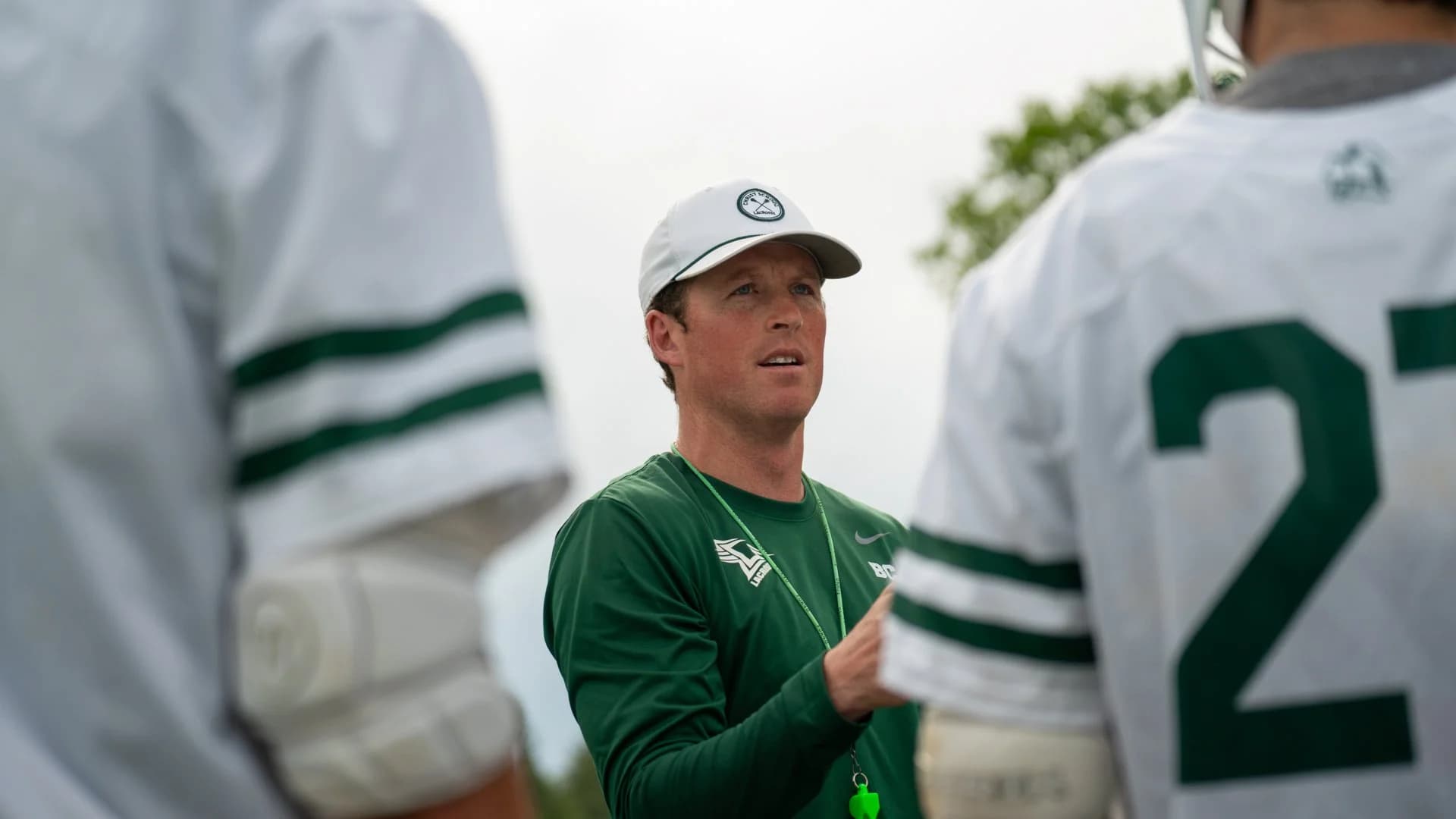
Founder of Timshel Personal Consulting. Nine years at Christ School (Asheville, NC) as teacher, coach, and Dean of Campus Life. Vanderbilt Peabody M.Ed. in Independent School Leadership. Lacrosse Program Director at The Covenant School in Charlottesville, VA. Sees clients across Virginia and North Carolina.